Paw / RapidAPI for Mac was discontinued in September 2026. This is where you go next.
Retriever sends your requests, keeps them in collections, switches environments, chains one response into the next and shows big JSON as a tree you can fold. It is a real Mac app written in Swift. Your work is plain files on your disk: no account, no cloud, no subscription.
Early adopter price, one-time · $39 later · version 0.4.0 · signed and notarized by Apple · macOS 15 or later
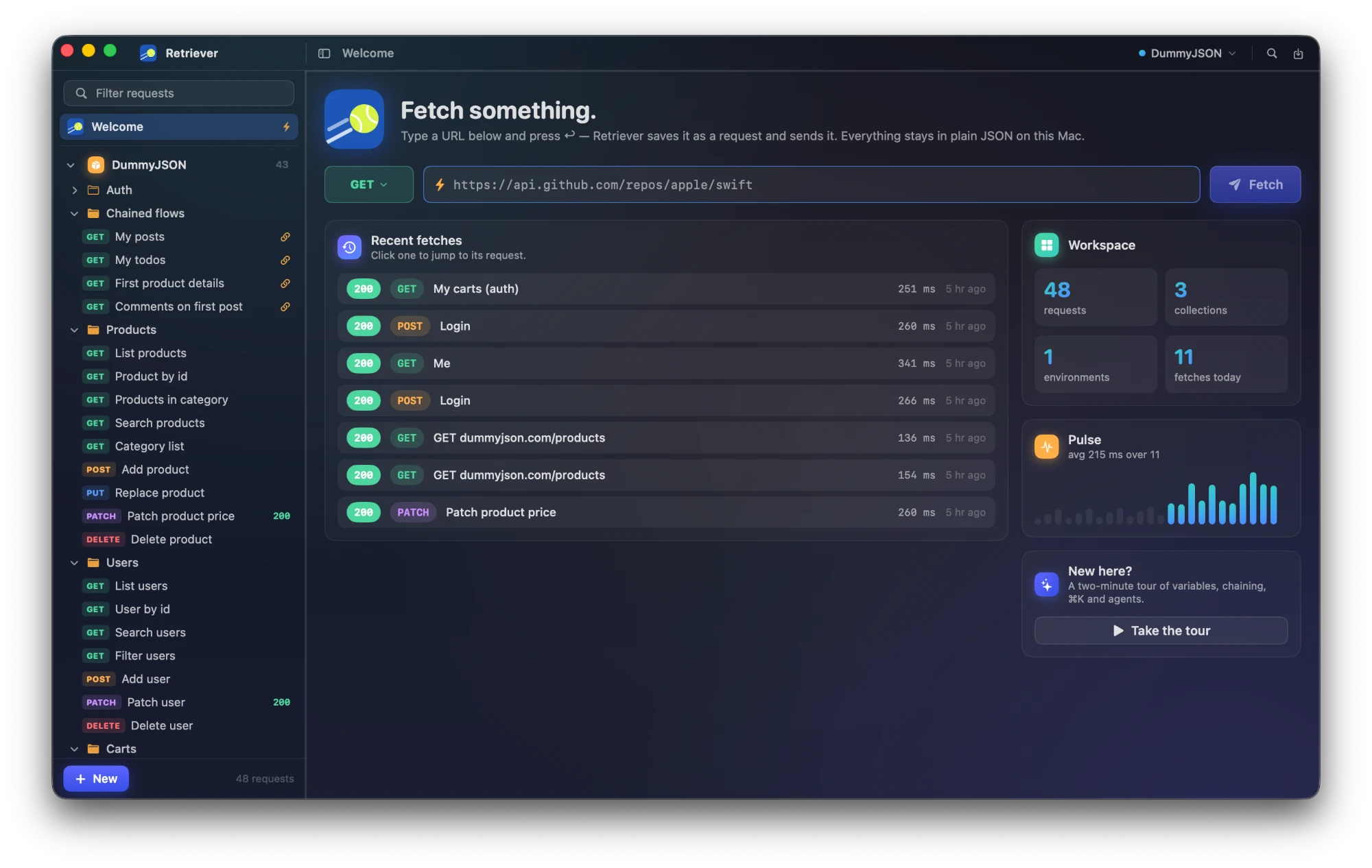
Write {{baseUrl}} and {{token}} once. Pick Local, Staging or Production in the toolbar and the same request hits a different server with different credentials.
Right-click any value in a response, copy it as a reference, paste it into another request.
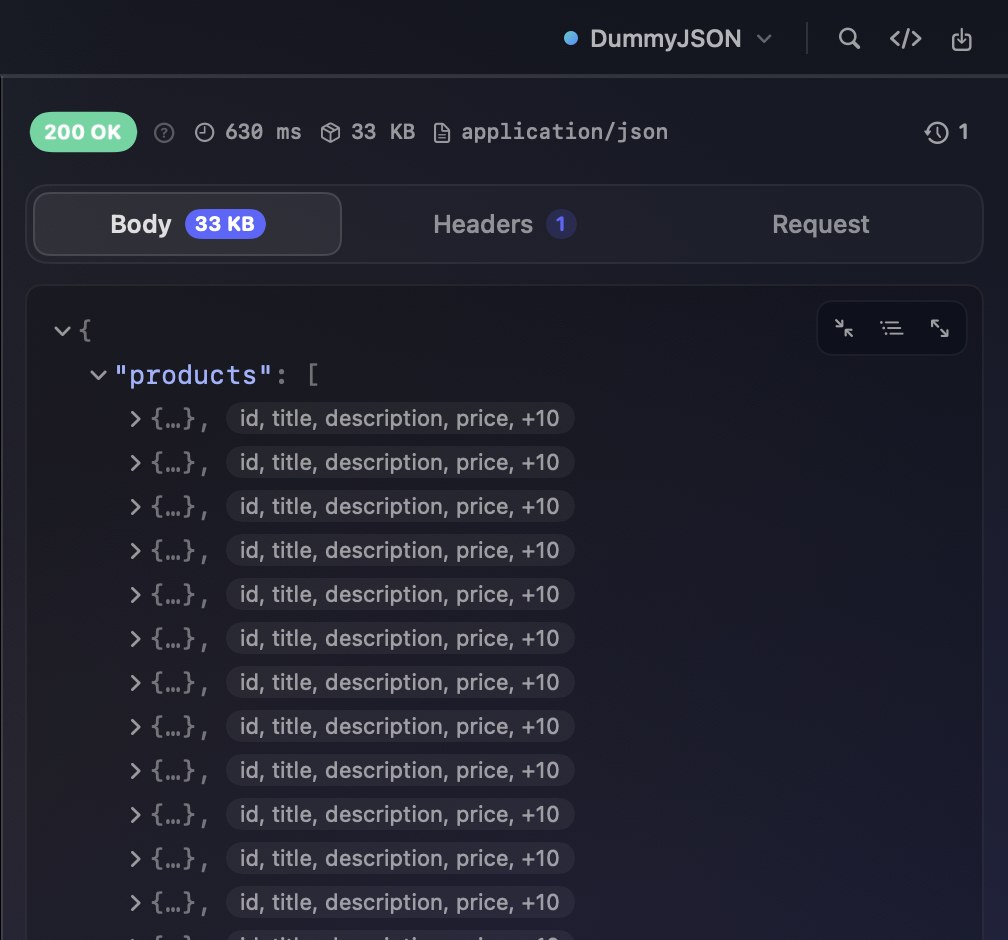
A 2,000-line payload opens at 67 lines. Folded objects preview their keys.
Jump to a request, switch environment, run a command. Every shortcut is rebindable.
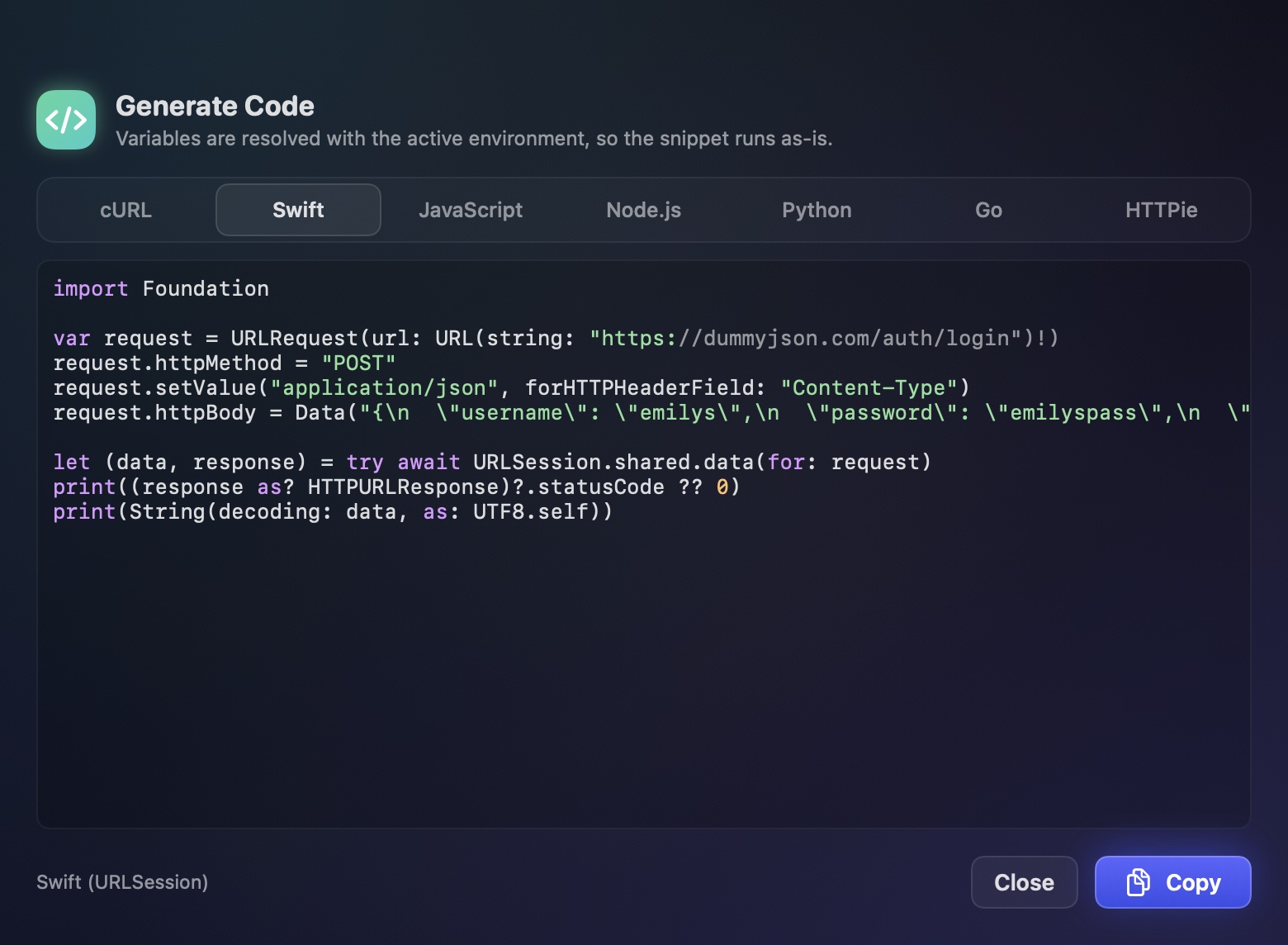
Any request becomes a runnable snippet with variables already resolved.
Every method, query and header tables you can also edit as JSON, a body editor that closes your braces, and a response pane that doesn't choke on real payloads.
Braces and quotes close themselves. Return between brackets opens an indented block. A wrong comma shows up as a quiet badge in the corner with the parser's exact complaint, not a modal.
{{$uuid}}, {{$isoTimestamp}}, {{$randomInt}}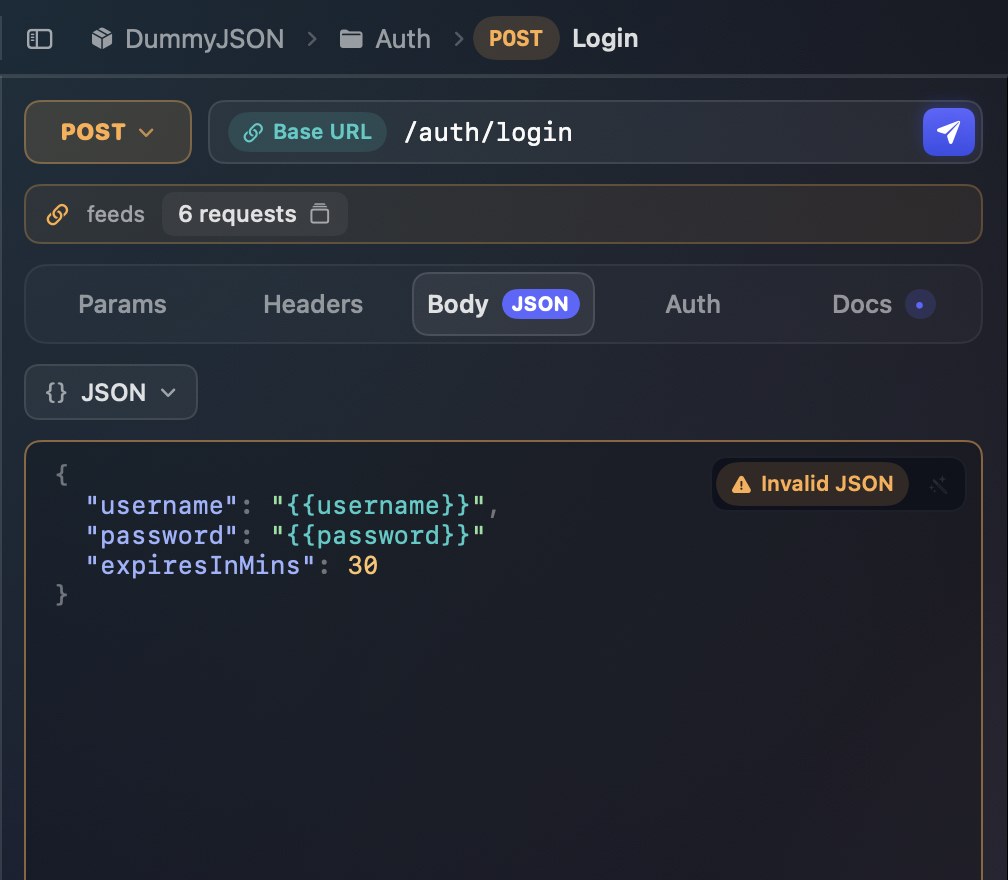
Responses are parsed once, off the main thread, and drawn as virtualized rows. Switching back to a request you sent an hour ago is immediate, because the last 25 responses of every request are kept.
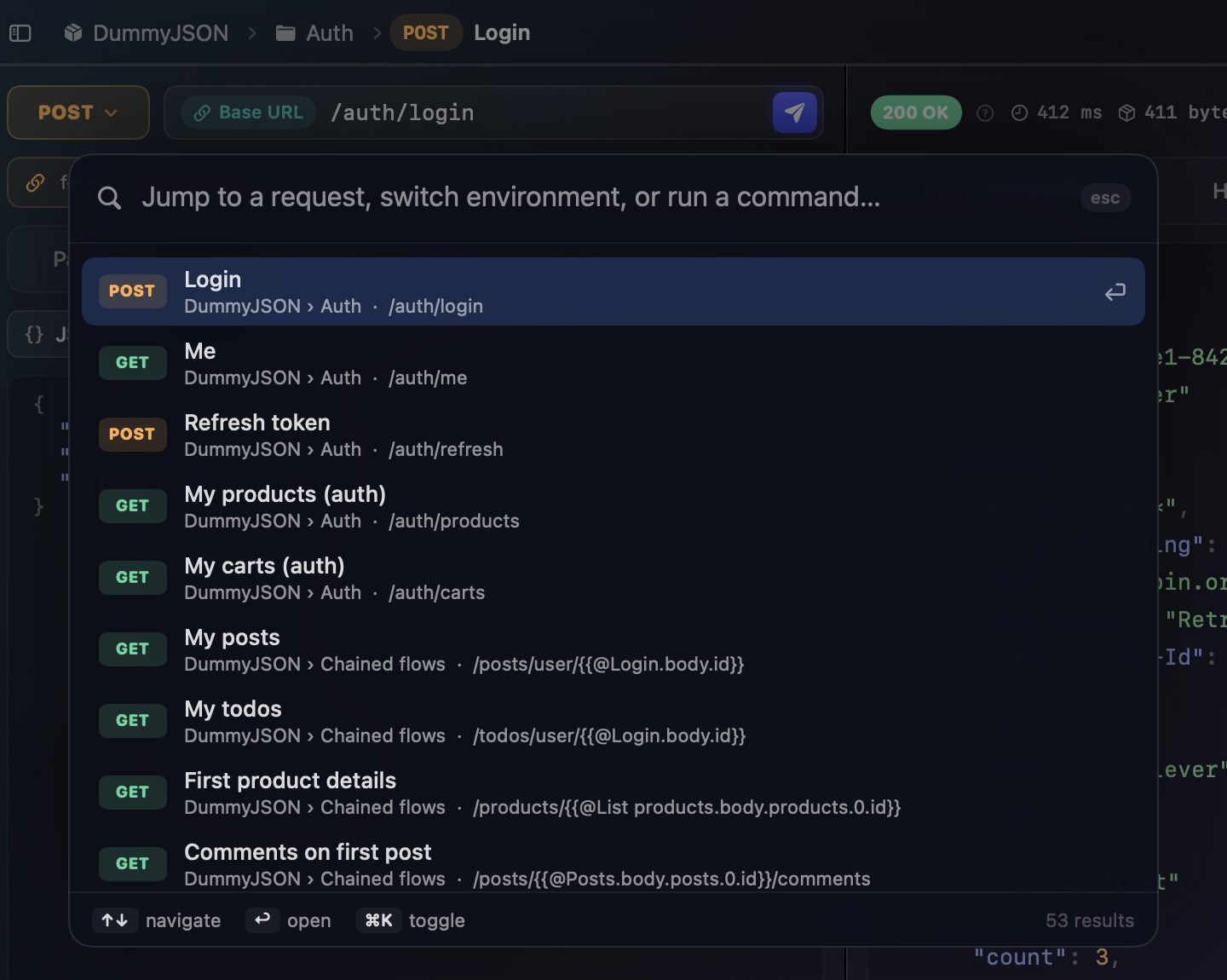
⌘K finds any request by name or URL, switches environments and runs commands. ⌘↩ sends. ⌘S folds the sidebar away. Don't like a shortcut? Click it in Settings and press a new one.
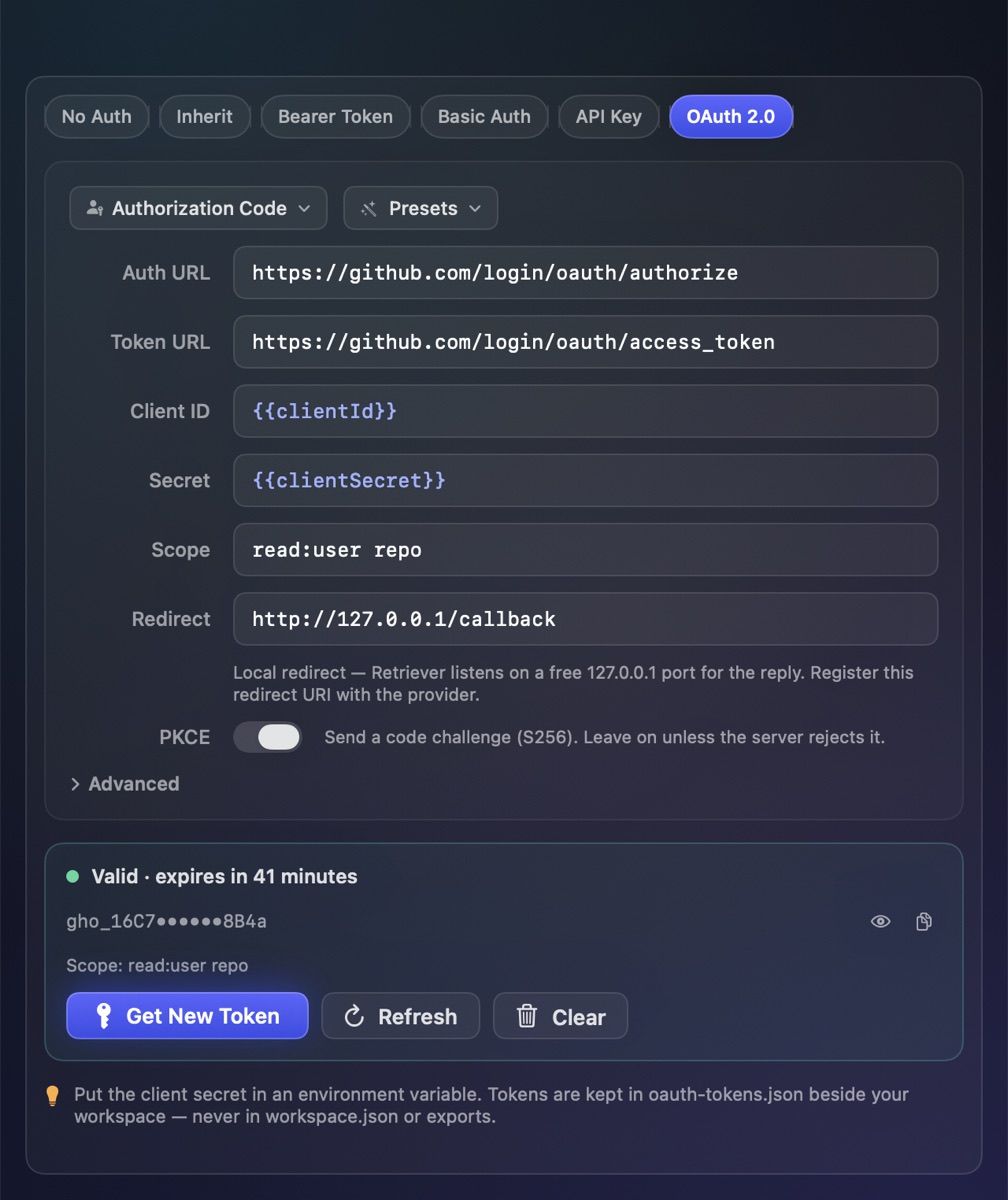
Pick a grant, fill in the endpoints or choose a preset, press ⌘↩. Retriever signs you in, attaches the token, and refreshes it before it expires. A 401 gets one quiet refresh and retry.
⇧⌘C turns the current request into cURL, Swift, JavaScript, Node.js, Python, Go or HTTPie, highlighted and ready to paste. Variables are resolved with the active environment, so the snippet runs as it is.
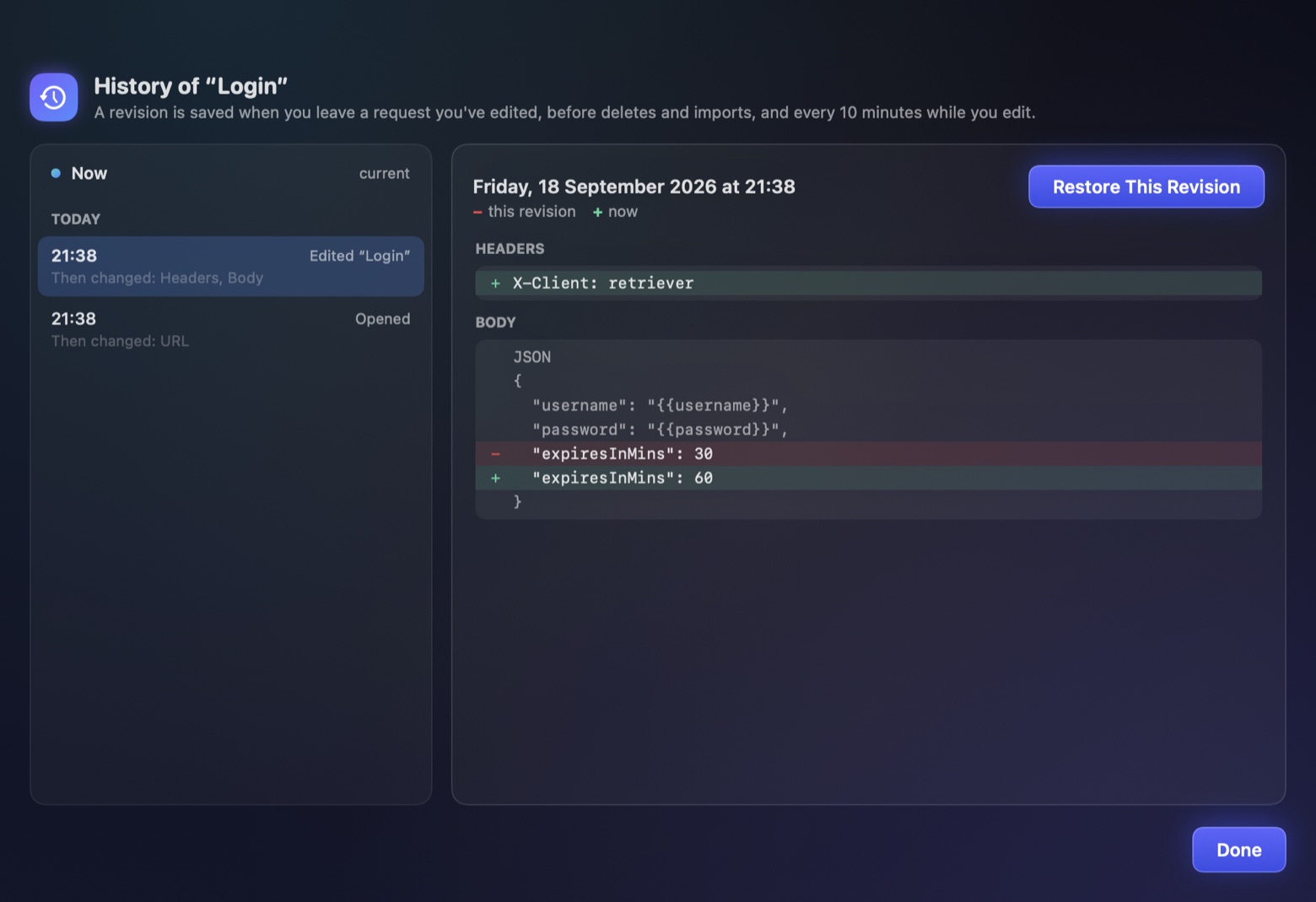
⌘Z brings back the folder you just deleted, the move you didn't mean and the import that made a mess. Every request keeps its own history too: see exactly what changed, line by line, and restore any earlier revision in one click.
Retriever ships a Model Context Protocol server. Claude Code, Cursor or any MCP client can list, create, edit and send your requests. It works on the same workspace file, so what the agent does appears in your sidebar within a second, and the responses it fetches land in your history.
Seventeen tools, from list_requests and send_request to import_curl and oauth_token. Requests that use OAuth 2 get their token automatically, and values that look like secrets are masked unless the agent asks to reveal them.
# Claude Code
claude mcp add retriever -- \
  /Applications/Retriever.app/Contents/MacOS/retriever-mcp

# Cursor / Claude Desktop
{ "mcpServers": { "retriever": {
    "command": "/Applications/Retriever.app/Contents/MacOS/retriever-mcp"
} } }

# then, in your agent:
> log in to the staging API and show me my open orders
RapidAPI for Mac is not supported on macOS 27 and will decay with every update. Your projects move over in a couple of minutes.
File → Export → Postman Collection (v2.1). Do the same for your environments.
⌘O, then paste the JSON or open the file. Folders, headers, bodies, auth and {{variables}} come across.
Choose it in the toolbar and press ⌘↩. Dynamic values map to {{$uuid}} and friends.
The full Paw migration guide, with a concept-by-concept table →
| Retriever | Paw / RapidAPI for Mac | Postman | Insomnia | Bruno | |
|---|---|---|---|---|---|
| Built as | Native Swift | Native | Electron | Electron | Electron |
| Status | Active | Discontinued Sept 2026 | Active | Active | Active |
| Account | None | Optional | Expected for sync and teams | Prompted since 2023 | None |
| Your data | Plain JSON on disk | Proprietary project file | Cloud-first | Local or cloud | Plain files in git |
| Price model | One-time | Was one-time, then free | Per user, per month | Per user, per month | Free, paid tiers |
| OAuth 2 with auto refresh | Yes, PKCE and device code | Yes | Yes | Yes | Yes |
| Chaining without scripts | Yes | Yes | Scripts | Yes | Scripts |
| MCP server for agents | Built in | No | Separate product | No | No |
As of September 2026, to the best of my knowledge. If something here is out of date, tell me and I'll fix it.
One payment, no subscription, no seats, no account to log into. This is the early adopter price: it goes up to $39 later, and what you buy now stays yours.
Buy Retriever for $19Yes. Retriever is written in Swift with SwiftUI and AppKit. The whole app is a few megabytes, launches instantly and idles at a fraction of the memory of an Electron client.
In ~/Library/Application Support/Retriever/: one workspace.json with your collections and environments, and one history file per request. It is plain, readable JSON. Back it up, sync it with whatever you like, or commit it to git. Nothing is sent anywhere except the requests you send.
Import: cURL commands (paste, or ⇧⌘V from the clipboard), Postman Collection v2.1 (OAuth 2 settings included), Postman environments, OpenAPI 3 and Swagger 2 (JSON). Export: Postman Collection v2.1, and code in seven languages.
Send the first request, right-click a value in its response and choose Copy as Chain Reference. You get something like {{@Login.body.accessToken}}. Paste it into any field of another request. Chained requests show a link in the sidebar, and Send chain runs the whole sequence in order.
Yes: authorization code with PKCE, client credentials, device code, password and refresh-token grants. Retriever fetches the token when you send, refreshes it before it expires, and retries once on a 401. The redirect can be a local http://127.0.0.1 listener, a custom scheme through the macOS sign-in sheet, or any https URL through an in-app browser, so redirect URIs registered for Postman keep working. Tokens are stored beside your workspace, readable only by you, and never exported.
Buy once through Polar and your license key arrives by email. Open Retriever, paste the key, done. The key is checked with Polar once a day when you're online; offline, Retriever keeps working for 30 days after the last check. To move to another Mac, use Settings → License → Deactivate on This Mac. Lost the key? It's in the Polar customer portal. The $19 early adopter price goes up to $39 later.
Press ⌘Z. Deletes, moves, imports and edits all undo. For anything older, each request has a History with its earlier revisions and a line-by-line diff, and File → Version History shows saved copies of the whole workspace, taken before every delete and import and every few minutes while you edit, so you can restore a single request or everything. The copies are plain JSON files beside your workspace.
A cookie jar, GraphQL introspection, WebSockets and gRPC. They are on the roadmap in roughly that order, driven by what people migrating from Paw hit first. Tell me which one blocks you. The full feature list has everything that's in.
No. Being a Mac app is the point.
No. It is a small local program that talks to your agent over stdio and reads the same workspace file the app uses. It makes exactly the HTTP requests your agent asks for.
I build small Mac apps that do one job properly. Retriever exists because the native API client I relied on was shut down and everything else wanted an account. Also mine: Capta, the screen recorder that edits itself. More at karakabakov.com.
No telemetry in the app: besides the requests you send, the only traffic is a daily license check with Polar, and it sends only your key and this Mac's activation ID. This site counts visits with Google Analytics, and only sets a cookie if you say yes. Privacy, in full.
 Retriever